
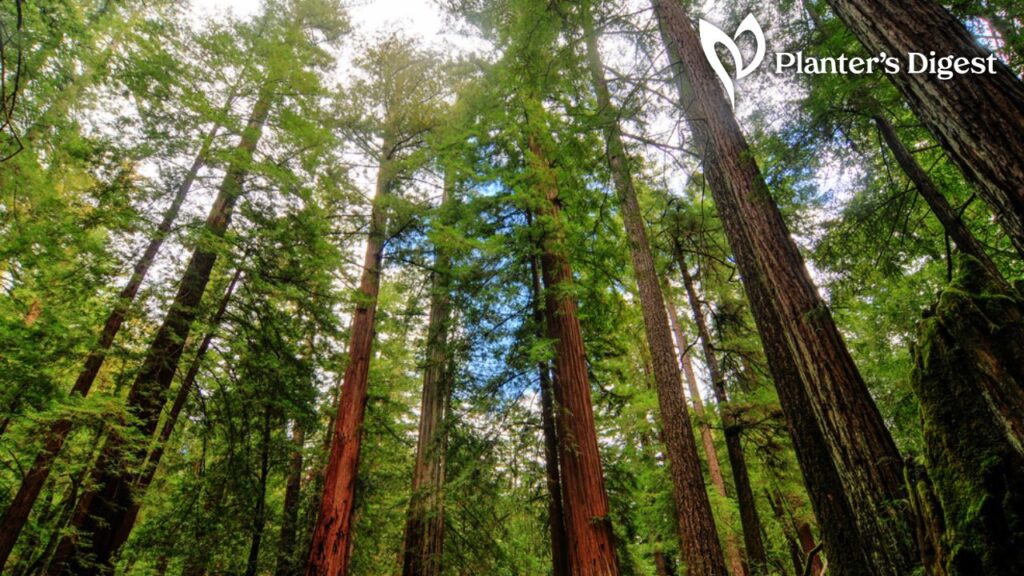
One of the properties on my street has these beautiful, towering redwoods in the backyard. You can practically see them from a mile away, and I can’t help but admire them every time I pass by.
Recently, though, I’ve been noticing one of the trees leaning to the side. When I had the chance to talk to the neighbor who owned it, he said he was planning to have it felled before it could do any damage.
During our conversation, he also asked if I dabbled in woodworking. Apparently, he wanted to give me some of the wood afterwards since he wasn’t completely sure what to do with it.
Truth be told, I’ve never tried, but I do burn wood in my fireplace during the winter. Before accepting his offer, I went down a research rabbit hole to see how redwood performs as firewood. Below is everything I discovered.
Is redwood a good firewood?
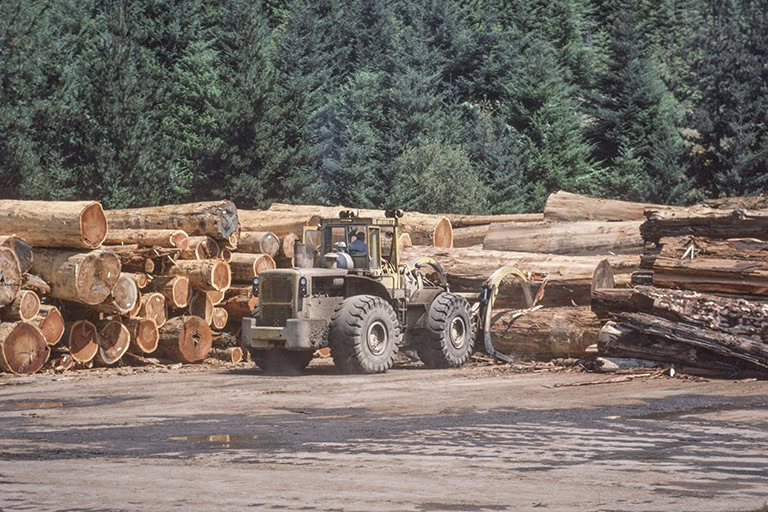
Redwood is regarded as a poor choice for firewood, due to its unimpressive heat content and its quick burning time. Still, some people use it as kindling or for short fires.
While redwood isn’t very abundant across the world, plenty of it can be found in several American states and Canadian regions. They can most commonly be seen in state parks, groves, and hiking trails.
That being said, many people still seek them out for their height and durability. The majority of the tree is often used for home upgrades and furniture, while the leftover wood is what people burn for fires.
To give it some credit, redwood isn’t that hard to ignite, and it has a BTU rating of 20.1 million per cord. This is pretty decent, considering other softwoods have a BTU rating as low as 14 million per cord.
However, its burning time doesn’t last very long. There have been many complaints about having to reload fires frequently when using it as firewood.
All things considered, most would agree that you’re better off using another tree as firewood if you’re looking for a more heat-efficient fire.
| Name | RedwoodSequoioideae (Scientific name) |
| Height | 300 to 370 feet |
| Heat Content (Million BTUs Per Cord) | 20.1 |
| Dry Weight (Pounds Per Cord) | Between 2,690 and 3,450 pounds |
| Green Weight (Pounds Per Cord) | Between 4,000 and 5,000 pounds |
| Burning Time | Short duration |
| Splitting Difficulty | Average |
| Tannin Content | High |
| Sap Content | Low |
| Smoke | Low |
| Smell | Pleasant |
| Coal Production | Low |
| Creosote Build-up | Moderate |
| Seasoning Time | 6 to 12 months |
What are the wood-burning properties of redwood?
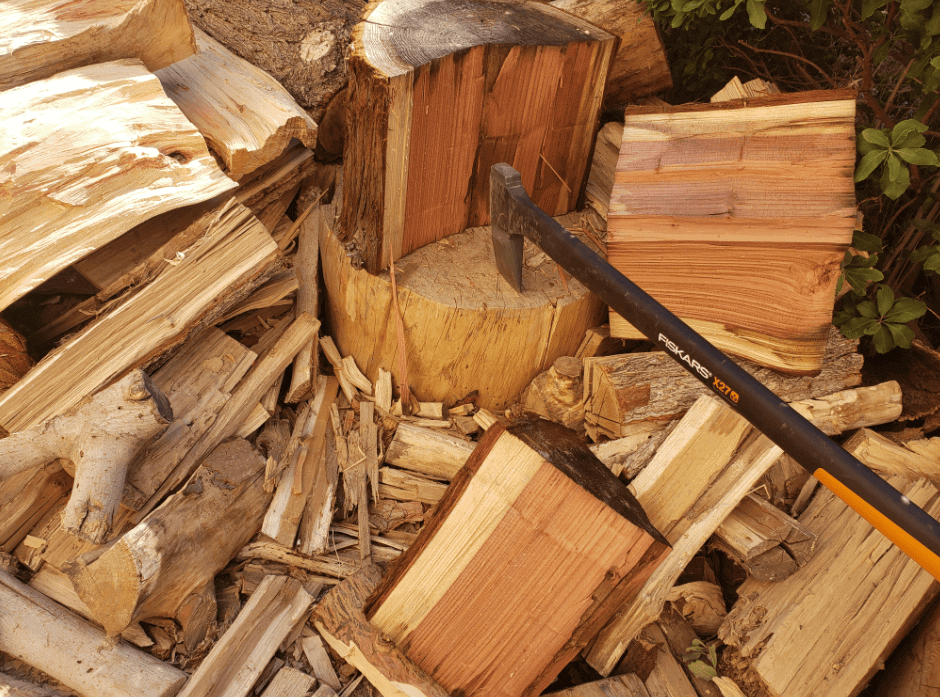
When burnt, redwood isn’t that impressive as a firewood due to its ordinary heat value and long burning time. And although it has a pleasant smell, its low smoke output and tendency to spark make it undesirable for smoking meats.
1. Average Heat Output
Redwood produces a decent amount of heat as a softwood, at 20.1 million BTUs per cord. Generally, softwoods aren’t known for producing a lot of heat, such as cedar only having a BTU rating of 14 million per cord, and spruce at 15.5 million BTUs per cord.
People don’t really gravitate to redwood as it is often overshadowed by hardwoods with higher BTU ratings. For reference, sugar maple has a heat output of 28 million BTUs per cord, and osage orange reaches up to 32 million BTUs per cord.
2. Short Burning Time
The main reason why redwood isn’t considered heat-effective is its short burning time. Even when properly seasoned, redwood often struggles to burn for more than an hour.
Because of this, you’d have to reload your fire very frequently. It’s highly recommended to mix redwood with hardwoods like oak and hickory for a longer burn.
3. High Tannin Content
Something very unique about redwood is that it has high tannin content. This is a natural substance that makes the wood resistant to fungi and insects.
As a result, redwoods can last pretty long both while they’re still alive and after they’ve been cut. You can store seasoned redwood for years in case you don’t end up using a whole bunch as kindling.
4. Low Sap Content
Unlike other softwoods, redwood trees don’t produce a lot of sap. This is the main reason they can be seasoned in a short amount of time.
5. Moderate Creosote Build-up
Redwood yields a moderate amount of creosote, thanks to its low sap content. However, it’s likely to produce more when not seasoned properly, making it a bigger hazard for your health and safety.
6. Low Smoke Output
Redwood isn’t great for smoking meats, based on its low smoke output and propensity to emit sparks. Additionally, its smoke is known for leaving a bitter, horrible taste.
7. Pleasant Smell
Even with very little smoke, redwoods have a distinct and pleasant scent. In fact, its refreshing fragrance has become a popular candle scent in the last few years. Some companies even produce redwood-scented fire logs just for aromatic indoor fires.
8. Low Coal Production
Similar to most softwoods, redwood doesn’t produce a high amount of coal. You’re better off using fruitwoods like cherry and apple.
9. Average Splitting Difficulty
Redwood requires little effort to split right after it’s cut. Its straight grain easily gives way to an axe or a maul.
However, this task gets more difficult as time passes. The drier and harder a redwood becomes, the more challenging splitting it will be.
It’s also worth noting that larger sections usually require the help of chainsaws or hydraulic splitters.
10. Short Seasoning Time
Depending on wood thickness, it usually takes somewhere between 6 months to a year for redwood to be seasoned properly. However, splitting a redwood right after it’s cut can speed up this process.
The Pros and Cons of Using Redwood as Firewood
| Pros | Cons |
| Aromatic Scent | Short Burning Duration |
| High Tannin Content | Unpleasant Smoke Output |
Pros
Aromatic Scent
The smell of redwood is perhaps one of the only reasons why people burn it. Many have expressed fondness for its sweet and earthy fragrance.
Long-Lasting Nature
Due to its high tannin content, properly stored and seasoned redwoods usually last longer before rotting compared to most softwoods. For reference, softwoods like pine and spruce usually start rotting after 10 years.
On the other hand, it can take up to 25 years before redwoods start showing signs of decay.
Cons
Short Burning Duration
Despite its decent heat output, redwood’s short burning time makes it inefficient for fires. The only way to make it last is if it’s mixed with other woods that burn longer.
Unpleasant Smoke Output
Redwood isn’t recommended for smoking meats. Apart from its low smoke output, it usually leaves a bitter, unpleasant taste on the meat.
FAQs About Redwood
How long do redwood trees last?
As some of the tallest trees on earth, most redwood varieties can last for more than 500 years, with some even going over 3,000 years.
Does redwood rot fast?
Similar to their natural lifespan, a cut redwood can impressively last around 15 to 25 years before rotting. This is thanks to their compact density and resistance to decay.
Why does redwood cost a lot?
Compared to other kinds of lumber and firewood, redwood tends to be more expensive. This is primarily because it grows slowly, so it’s not as abundant as other trees.