
Whenever autumn rolls around, I start getting the urge to take a couple of photos for the family album. It’s like the camera starts nudging me to take advantage of the trees changing color.
Because I’m extra, I had some sugar maple trees planted in the yard to serve as our backdrop. These trees become the most stunning shade of orange you’ve ever seen, and I just had to have them.
Though I couldn’t help but wonder if I could use them for anything else. In case I ever had to take them down, would they be good for any other purpose?
And so, I went down a rabbit hole of whether sugar maple would be good as firewood. Below, I’ve documented everything I learned to help out other curious people like me.
Is sugar maple a good firewood?
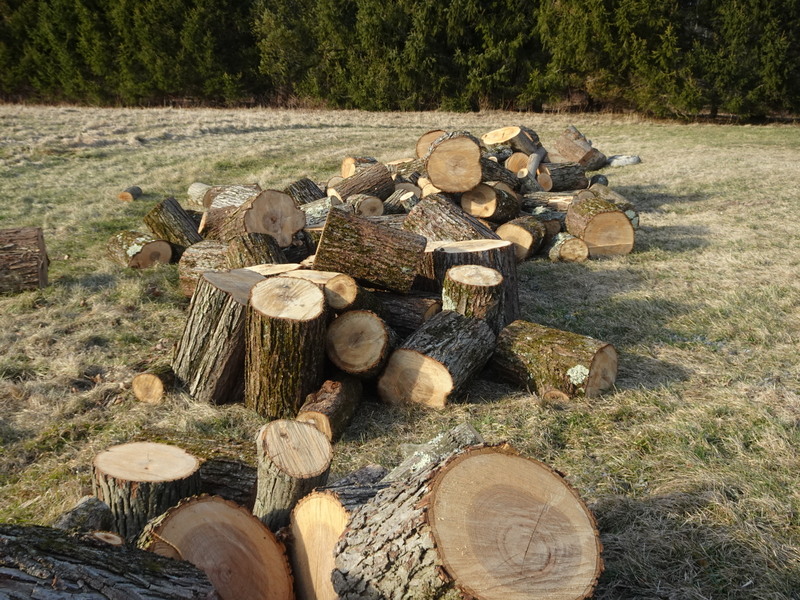
Sugar maple is considered a great choice for firewood, based on its long burning time of up to 8 hours and high heat output of 29 million BTUs per cord. However, it requires around 2 years of seasoning for it to perform well.
The high amount of sugar maple in Eastern and Midwestern America, as well as Southeastern Canada, makes it one of the most common options for firewood. Currently, it’s ranked as the 4th most abundant tree species in the Eastern U.S.
But the biggest reason why so many prefer using it is that it produces a BTU rating of 29 million per cord. This is impressive, even for a hardwood, since it’s enough to keep your home warm, even when temperatures drop significantly.
It also helps that sugar maple burns for a long time. You can count on it to provide a consistent amount of heat for around 6 to 8 hours.
The only caveat is that sugar maple needs to be seasoned properly for it to burn as hot and as long as it should. Although some say that it burns okay after a year, most would recommend waiting for 2.
| Name | Sugar Maple |
| Height | 60 to 100 feet |
| Heat Content (Million BTUs Per Cord) | 29 |
| Dry Weight (Pounds Per Cord) | 3757 |
| Green Weight (Pounds Per Cord) | 5100 |
| Burning Time | Long duration |
| Splitting Difficulty | Average |
| Sap Content | High |
| Smoke | Moderate |
| Smell | Mild |
| Coal Production | High |
| Creosote Build-up | Low |
| Seasoning Time | 1 to 2 years |
What are the wood-burning properties of sugar maple?
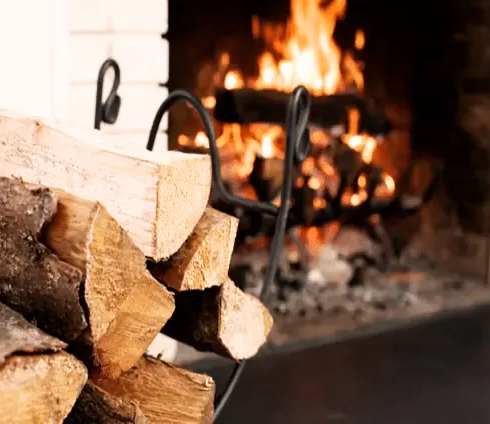
When burnt, sugar maple is an excellent firewood, due to its high heat output and long burning time. It produces a decent amount of mild-smelling smoke, and minimal creosote build-up.
However, its high sap content means that it should be seasoned for a long time for it to achieve these results.
1. High Heat Output
Sugar maple produces an impressive amount of heat as a hardwood, at 29 million BTUs per cord. This falls on the higher end of the spectrum and is more than enough to keep a home warm.
For reference, BTU ratings for hardwoods typically range from 18 million to 32 million. Hardwoods like poplar and cottonwood have BTU ratings as low as 18 million, while ash and osage orange can reach up to 32 million per cord.
2. Long Burning Time
A well-seasoned sugar maple can burn for up to 6 to 8 hours, thanks to its hardness and density. In fact, these properties are the reason why it’s also called a “rock maple”.
Of course, size and stacking can extend burning time even more. A tightly stacked pack of large sugar maple logs may even last long enough for an all-night fire.
3. High Sap Content
Sugar maple trees produce a high amount of sap for a hardwood. It’s why they’re the top source of maple syrup.
Unfortunately, this is also the primary reason why they require a long seasoning time.
4. Moderate Smoke Output
Like most hardwoods, sugar maple produces a moderate amount of smoke. This means that it’s fine for indoor fires and fireplaces.
What makes sugar maple stand out, though, is its pleasant and mildly sweet aroma. Because of this, many choose it for smoking fish and lighter meats.
5. High Coal Production
As a hardwood, sugar maple produces a high amount of coal. It yields much more than other hardwoods like pine, maple, and ash.
6. Low Creosote Build-up
Compared to most hardwoods, sugar maple doesn’t produce a lot of creosote buildup. This is mostly because it burns hotter and cleaner.
However, a sugar maple that hasn’t been seasoned for long enough may result in a higher amount of creosote due to its sap content. In this case, you’ll have to clean your chimney more often, or it might become a hazard to your household’s safety and health.
7. Average Splitting Difficulty
For the most part, sugar maple is considered somewhat easy to split, since it is mostly straight-grained.
However, the presence of knots, burls, and gnarly grain can make the task much more challenging. In this case, some people wait for freezing temperatures so that their sugar maple is more rigid and much easier to split.
8. Long Seasoning Time
Those who plan on using sugar maple as firewood should allow around 1 to 2 years for it to be properly seasoned.
However, keep in mind that although sugar maple already produces a good amount of heat after a year of seasoning, it’ll also result in slightly shorter burning time and more creosote build-up.
What are the main varieties of maple and their differences?
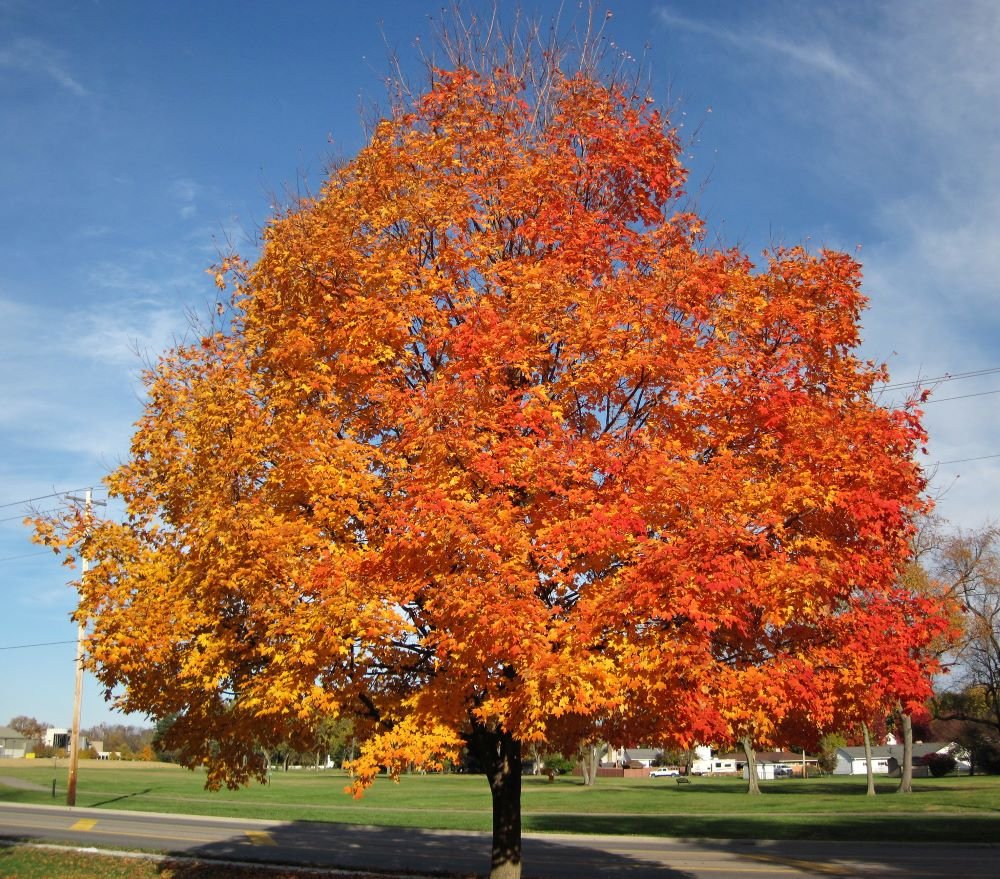
There are around 130 maple tree species internationally, with 13 being native to North America. Among these, the most common would be Sugar Maple, Red Maple, and Silver Maple.
| Common Name | Sugar Maple | Red Maple | Silver Maple |
| Scientific Name | Acer saccharum | Acer rubrum | Acer saccharinum |
| Distribution | Eastern & Midwestern America, Southeastern Canada | Eastern & Central North America | Eastern and Central America, Southeastern Canada |
| Height | 60 to 100 feet | 40 to 60 feet | 50 to 100 feet |
| Width | 30 to 60 feet | 30 to 50 feet | 35 to 50 feet |
| Density | 44 pounds per cubic foot | 38 pounds per cubic foot | 33 pounds per cubic foot |
| Heat Content (Million BTUs Per Cord) | 29 | 24 | 21.7 |
| Seasoning Time | 1 to 2 years | 6 months to 1 year | 8 to 10 months |
Out of the three, sugar maple usually grows the tallest, reaching up to 60 feet, while the others only make it to about 50 feet.
It also produces the most heat, with a rating of 29 million BTUs per cord. Meanwhile, red maple can yield 24 million BTUs per cord, and silver maple reaches up to 21.7 million BTUs per cord.
However, sugar maple takes the longest to dry, with a seasoning time of 1 to 2 years. Red maple is the fastest, with it being usable as soon as 6 months, while silver maple dries within 8 to 10 months.
The Pros and Cons of Using Sugar Maple as Firewood
| Pros | Cons |
| High Heat Output | Long Seasoning Time |
| Long Burning Time | |
| Mild Burning Smell | |
| Low Creosote Build-up |
Pros
High Heat Output
Many people opt to use sugar maple as firewood for its high heat output. It’s hot enough for cooking and to warm up a house during the colder seasons.
Long Burning Time
Sugar maple is known for its lengthy burning duration. When stacked properly, it can last up to several hours, reducing the need to load in more logs.
Mild Burning Smell
The smell of burning sugar maple has often been described as pleasant. It’s usually mild and somewhat sweet, almost like the smell of maple syrup.
This is also why it’s a popular choice for smoking food. Many people use it to enhance the flavor of light meats, vegetables, and cheeses.
Low Creosote Build-up
Minimal creosote build-up is generally better for indoor fires, making sugar maple a good option. When seasoned properly, homeowners notice that they don’t have to clean out their chimneys as much.
Cons
Long Seasoning Time
The only drawback with using sugar maple as firewood is that it has to be seasoned for a long time. It’s best to wait 1 to 2 years for the wood to properly dry.
This is mainly due to its high sap content. Although this is good for maple syrup production, it’s not as desirable for firewood. If sugar maple is burnt before it’s fully seasoned, it won’t be as hot and will produce much more creosote.
FAQs
Is sugar maple considered good wood?
Yes, many people consider sugar maple as high-quality wood. Its durable and shock-resistant lumber is often used for flooring and furniture, while its sap is gathered to make maple syrup.
Is sugar maple okay to use for wood-burning stoves?
Yes, hardwoods like sugar maple are ideal for wood-burning stoves. Their high heat output and long burning time make them great fuel for cooking.
What are the best varieties of maple to use as firewood?
The best types of maple to use as firewood would be sugar maple, red maple, silver maple, black maple, and Norway maple.